
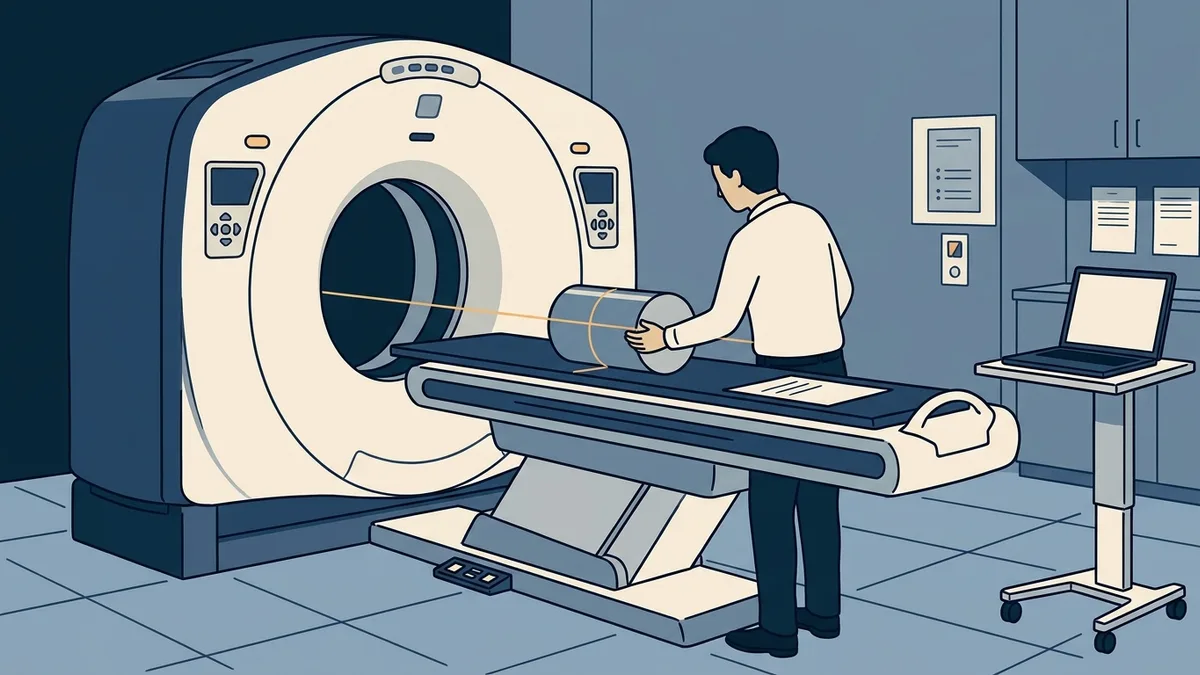
Since January 1, 2026, the ACR requires phantom exams for CT, MR and nuclear medicine or PET to be done within 14 months of the date the testing package is released. A medical physicist performs the evaluation and phantom dosimetry, so book that visit with the deadline in mind.
An ACR application has two halves: the online application with personnel and equipment, then the testing package with clinical images, scanning protocols, phantom images, dose measurements and quality control information. The phantom images are the part most likely to age out.
When did the 14-month rule start?
According to the ACR's support pages (revised August 4, 2026), phantom exams for CT, MR and nuclear medicine or PET must be performed within 14 months of the date the testing package is released. A phantom run in a slow month and an application finished a year later can fail on dates alone.
Who runs the phantom?
The facility's medical physicist handles the annual system performance evaluation and the phantom dosimetry. That makes the physicist's calendar the real critical path. A physicist who is booked for six weeks, plus a package that takes two months to assemble, eats a large share of the window before anyone looks at clinical cases.
How do you schedule around it?
- Note the release date of the testing package the day it arrives and write the 14-month deadline beside it.
- Book the physicist for the phantom run once the clinical image selection is almost done, not at the start.
- Check every unit in the application. A site with two MR scanners needs both inside the window.
- Keep the raw phantom images and the dose measurements in one folder named by unit.
A sample timeline
This hypothetical timeline is one way to keep the window safe. The testing package is released on day one. By day 30 the physicist is booked and the clinical case list is drafted. By day 90 the phantom run is done, which leaves roughly eleven months of the window unused as a buffer. By day 180 the clinical images are collected and reviewed. The application is submitted well before the 14-month mark. The point is the buffer: the deadline is rarely missed by a large margin, it is missed by a few weeks because the physicist was ill or a scanner needed service.
Scanner service matters. If a unit has major service or a software upgrade between the phantom run and the submission, ask the ACR whether the phantom images still represent the unit. We do not know the answer for every case, and it is the accreditor's call.
What goes in the phantom folder
For each unit, one folder with the phantom images in the format the ACR asks for, the dose measurements, the physicist's name and signature date on the report, and the scanner's identifying information. Name the folder by unit and by date. When an ACR reviewer asks for a replacement image, the person who finds it in two minutes saves the application a week.
Questions for the physicist
- What is the earliest date you can run all units, not just the first?
- If a unit fails a test, how fast can you return after the repair?
- Who covers if you are away during the window?
Who holds the deadline
The facility holds it, not the physicist and not a consultant. Put the deadline on the administrator's calendar with a reminder at the halfway mark, and ask the physicist to confirm the booked date in writing each quarter until the phantom run is done.
If the window closes, what happens?
The phantom exam would need to be repeated. The ACR also lists repeat fees of $750 to $2,200 (see what ACR charges), though we cannot tell you which fee a particular repeat triggers; ask the ACR.
Accreditation Readiness from White Glove Radiology ($1,995 per site) puts those dates into a tracked schedule and prepares the package documents for the facility's review. The facility and its physicist generate the images and sign.
Common questions
- How recent must ACR phantom images be?
- Within 14 months of the testing package release date for CT, MR and nuclear medicine or PET, starting January 1, 2026.
- Who performs the phantom exam?
- The facility's medical physicist, who does the annual system performance evaluation and the phantom dosimetry.
- Does the window apply to each unit?
- Plan on it. Each unit in the application has its own phantom images, so check every one against the date.
Need Help with Licensing or Enrollment?
We prepare the application for your radiologist, owner or authorized official to sign, then track renewals, inspections and changes.